Formulate with purpose.
Evaluate how ingredients work together, balancing fire-retarding performance with flow, stability and material compatibility.
Chemistry + physical propertiesWildland fire retardant development
Thoughtful chemistry. Consistent mixing. Careful testing.
Narline is working on new formulations for wildland firefighting—with the practical demands of manufacturing and use in mind.
See our approach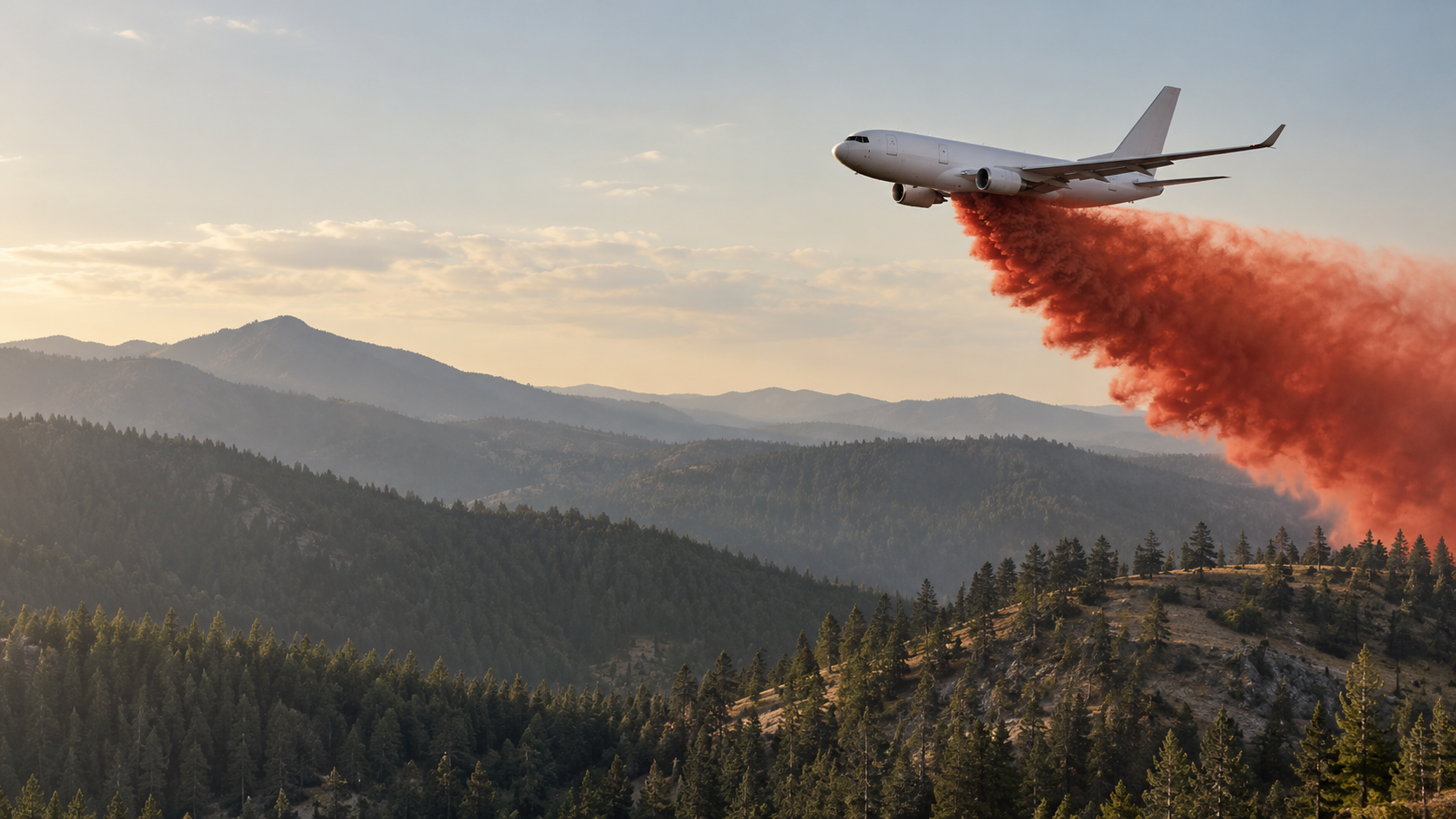
The purpose
Fire retardants help reduce how quickly vegetation burns and how intensely a fire moves through treated fuel.
Water absorbs heat as it evaporates. Long-term retardants also use active ingredients that interfere with combustion, so their effect can continue after the water has dried.
Retardant can be applied ahead of a fire to help slow its advance. Its effectiveness depends on the formulation, coverage, weather and terrain—and the work of the crews on the ground.
02 / Our approach
We’re developing with the whole process in mind: how a material is made, mixed, stored, measured and eventually put to use.
Evaluate how ingredients work together, balancing fire-retarding performance with flow, stability and material compatibility.
Chemistry + physical propertiesConcentration, mixing time and the order of addition can change the result. A useful formulation needs a repeatable process and checks that show the batch is uniform.
Concentration + viscosity + uniformityMoving beyond a small batch means controlling raw materials, recording each lot and checking that storage and handling haven’t changed the product.
Batch records + quality controlCompare results, understand what changed and use that evidence to improve the next formulation. Testing has to guide the work from the start.
Documented results + deliberate iteration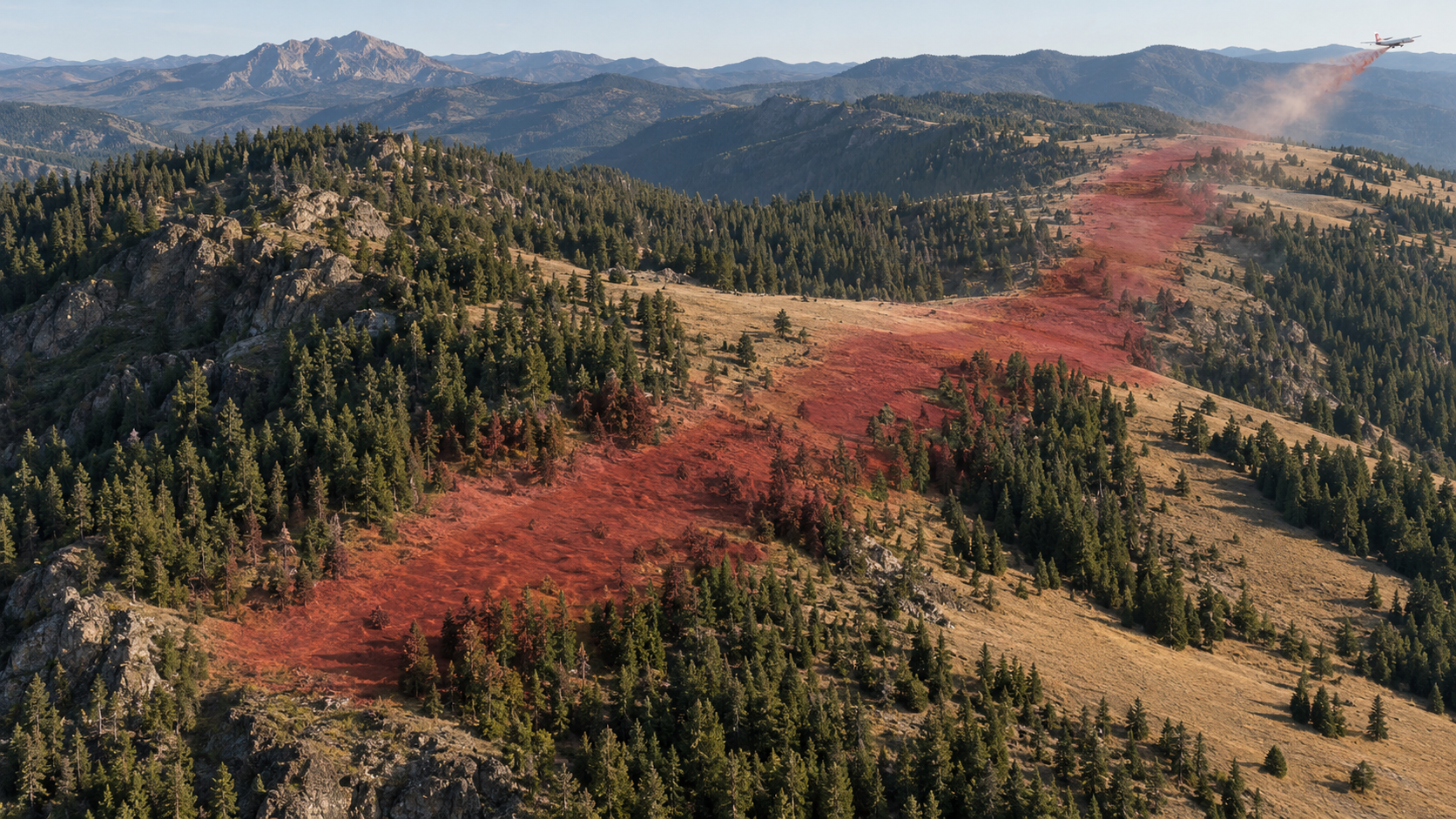
The practical questions
A formulation can look promising on paper and behave differently once it is mixed. How easily does it disperse? Does the thickness stay consistent? What happens after storage?
Those details matter when developing a material that needs to move through pumps, remain uniform and be applied predictably.
What we need to evaluate03 / Evaluation
Our development work needs to address more than how a formula behaves around fire. Handling, compatibility and environmental effects belong in the same conversation.
How effectively does the treatment reduce combustion? How does it perform once the water has evaporated?
Measure properties such as viscosity, density and pH. Evaluate stability and potential corrosion of equipment materials.
Understand ingredient hazards, exposure and effects on living systems. Environmental evaluation is part of responsible product development.
We are at the development stage, with formal qualification and operational evaluation still ahead.
04 / Let’s talk
We’d like to hear from people with experience in fire chemistry, testing and manufacturing.
Contact Narline eli.janes@narline.com